【Dunia Nusatara-インドネシア ヌサンタラの世界-】
インドネシア共和国(インドネシア語:Republik Indonesia)は、東南アジアに位置する大小1万5千の島々からなる島嶼国家であり、人口2億7,000万人を超える世界最大のイスラム国家としても知られています。そして、およそ300の民族からなる多民族国家であり、それぞれの民族が固有の文化や習慣を保持してきました。ジャワ島には、インドネシア共和国最大に民族集団であるジャワ族をはじめ、スンダ族、マドゥラ族など混住し、隣接するバリ島には、バリヒンドゥー教を信仰する人々に加え、14世紀以降にジャワ島からバリ島へ移住したマジャパヒト王国時代の慣習や風習などの固有な文化も多く残されている。
本展のタイトルにある「ドゥニア・ヌサタラ(Duina Nusantara)」は、直訳すれば「ヌサンタラの世界」という意味である。ヌサンタラ(NUSANTARA)とは、古ジャワ語で「群島」という意味であり、ジャワ島中部東部を中心栄えたヒンドゥー教のマジャパヒト王国(Kerajaan
Majapahit)が統治した地域を指す。ヌサンタラは、現在のジャワ島を中心に、西はスマトラ島、南はカリマンタン島、スラウェシ島、東は、ニューギニア島の一部を含む広大な領土を擁し、南海諸王朝の歴史の中で最大の版図を築いた。この栄華は、当時、マジャパイト王国の宰相を務めたガジャ・マダ(Gadjah
Mada)によって成し遂げられたものである。天賦の才を有したガジャ・マダの伝説は、現在もインドネシアの英雄として古くより語りつがれている。
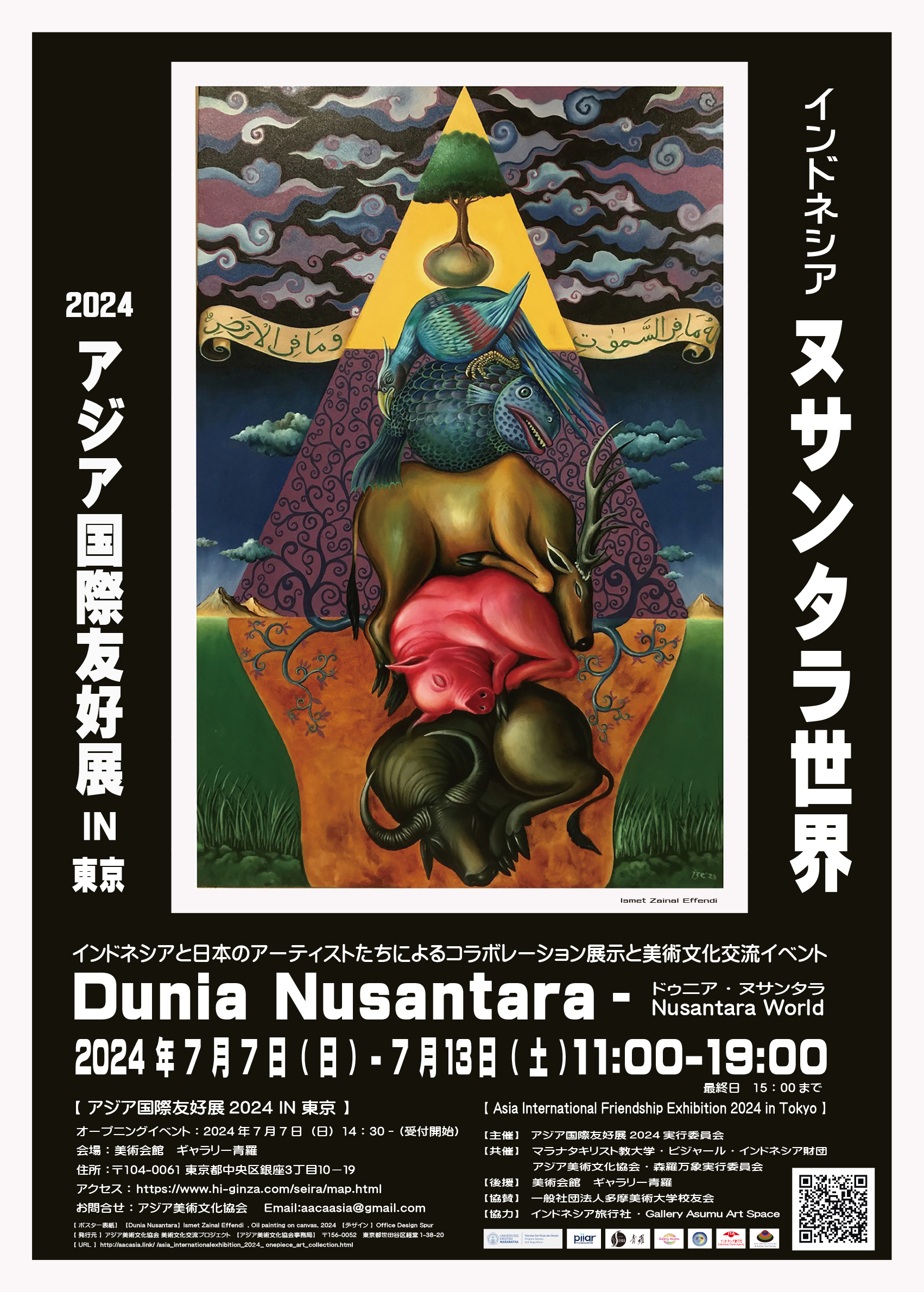
「インドネシア美術とは何か?」イスメット氏が描いたグヌンガン(Gunungan)は、ヒンドゥー教の影響の下で発展した伝統的なワヤン・クリ(Wayang
kulit)の人形劇に使用され、影絵劇ともいわれるワヤン公演の始まりを告げる特別なモチーフである。グヌンガンは聖なる山をイメージしており、山の中には天界・中界・地界の3つの世界が存在するという。インドネシアの伝統美術は、これらの三界を結びつける宇宙山を示すモチーフが多く存在し、これらは中部ジャワに位置するボロブドゥール寺院と同様に仏教における宇宙観を示す立体曼荼羅世界を示している。そして、宇宙山まわりには、この世での生涯を終えた聖者たちの霊魂を天上世界へと送る聖獣が登場する。
「ヌサンタラ世界」とは、インドネシアという美術文化に限定されるのではなく「アジア」という大きな枠組みの中で美術文化と教育活動を考える契機となる展覧会である。インドネシアのアーティストが描く作品世界には、日本と共通する美術のつながりを感じる一方で、宗教や慣習などの文化の違いについて改めて気づかされるのではないだろうか。ヌサンタラはインドネシアの人々にとって、栄華と誇りを感じる古語であり、同時に豊かな伝統と好奇心を呼び起こす母語であり、インドネシアの現代美術の世界にも、その栄華と伝統と革新の融合がみてとれる。
アジア国際友好展 2024 キュレーター 水田 泉
【Dunia Nusatara-Indonesia Nusantara World-】
The Republic of Indonesia (Indonesian: Republik Indonesia) is an island
nation located in Southeast Asia, consisting of 15,000 large and small
islands, and is also known as the world's largest Islamic country with
a population of over 270 million people. ``Dunia Nusatara'' in the title
of this exhibition literally means ``Nusantara World.''
Nusantara is an Old Javanese word meaning ``archipelago,'' and refers to
the area ruled by the Hindu Majapahit Kingdom, which flourished in central-eastern
Java from 1293 to 1478. means. Nusantara has a vast territory centered
on present-day Java Island, Sumatra Island to the west, Kalimantan Island
and Sulawesi Island to the south, and part of New Guinea Island to the
east, and is the largest in the history of the South Sea dynasties. Established
a map. This prosperity was achieved by Gadjah Mada, who was the prime minister
of the Majapite kingdom at the time. The legend of Gadjah Mada, who had
a natural talent, is still passed down as a hero of Indonesia since ancient
times.
`What is Indonesian art?'' Mr. Ismet's depiction of Gunungan is a special
motif that signals the start of a wayang performance, which is known for
traditional shadow puppetry. Gunungan has the image of a sacred mountain,
and it is said that there are three worlds within the mountain: the heavenly
world, the middle world, and the earthly world. Traditional Indonesian
art represents a cosmic mountain that connects these three worlds, and
like the Borobudur Temple in Central Java, it shows a three-dimensional
mandala world that represents the Buddhist cosmology. Sacred beasts appear
around Space Mountain, sending the souls of saints who have finished their
lives on this earth to the heavenly world.
``The World of Nusantara'' is an exhibition that provides an opportunity
to think about art culture and educational activities within the larger
framework of ``Asia,'' rather than being limited to the art culture of
Indonesia. While the worlds of works drawn by Indonesian artists may give
you a sense of the art connections that they share with Japan, you may
also be reminded of the cultural differences in religion, customs, and
other areas.
Nusantara is a word that evokes a rich tradition and curiosity for Indonesian
people, and the fusion of tradition and innovation can be seen in the world
of contemporary Indonesian visual art.
・Curator of Asia International Friendship Exhibition 2024
・Izumi Mizuta